



From New Faculty to Lifelong Educators: Reflections on the 2026 UP Manila NExT Conference
The University of the Philippines Manila’s 2026 New Employee Orientation Program (UPM NExT Conference), held on September 28–29, 2026, brought together new faculty members to explore the University’s structures, teaching approaches, professional development opportunities, and broader responsibilities as educators and public servants.
With the theme “Empowering the Next UPM Educators: Navigating University Structures, Expanding Teaching Methods, Thriving through Professional Development,” the conference provided a venue for participants to better understand their roles within the University and the many opportunities available to support their professional growth. Beyond familiarizing faculty members with institutional processes, it encouraged reflection on the values, responsibilities, and shared aspirations that define the UP Manila academic community.
For the participants, the experience was not only about learning how to navigate the University but also about recognizing how their individual contributions connect to UP Manila’s larger mission of advancing education, research, and public service.
Finding purpose in the University
For many participants, the conference offered a renewed appreciation of what it means to be part of UP Manila. Asst. Professor Anna-Liza Tan Pascual from the Department of Occupational Therapy highlighted the University’s commitment to supporting faculty research, noting that while research is an expectation of academic life, faculty members are also provided with support and opportunities to pursue it. This balance between institutional expectations and faculty development reinforces the importance of cultivating a research culture that enables educators to contribute to knowledge production and evidence-informed practice.
Asst. Professor Veronica De from the Department of Occupational Therapy who had participated in the conference twice as a new faculty member, reflected on the inspiration drawn from colleagues who had established their careers in the University. Seeing faculty members who have dedicated years to UP Manila offered a renewed perspective on the fulfillment of being part of the institution and the support it extends to its people. The experience also brought a longer-term aspiration into focus: to continue growing within the University and, hopefully, build a lifelong career in UP.
For Ms. Juliana Marie Galbizo, an Instructor from the Department of Occupational Therapy, the conference was an opportunity to connect her experiences as a UP graduate with her responsibilities as a faculty member. Returning to the University in a teaching capacity offers a different perspective on the institution that helped shape her own professional development.
“Having experienced UP Manila as a student and now as an educator, I hope to deepen my understanding of how I can contribute to the University’s mission beyond my own classroom. I want to continue learning from my colleagues, exploring opportunities for research and extension, and becoming a better educator and public servant. Being part of UP is both a privilege and a responsibility, and I look forward to growing into that responsibility throughout my career.”
For Ms. Jessa Fadri, the conference also provided practical guidance on navigating her responsibilities as a new faculty member and program head. She had hoped to gain a better understanding of the University’s organizational structure, the offices she would need to coordinate with, and the processes involved in fulfilling her roles. Having spent the past three years as a teaching assistant, she had largely focused on teaching. The conference broadened her perspective, helping her recognize that research, public service, and administrative work are equally important aspects of academic life.
The conference also offered participants an opportunity to learn from faculty members who had navigated different stages of their academic careers. For Dr. Joseph Causapin, for instance, he was particularly inspired by the session with the Assistant Vice President for Academics from UP Diliman. The speaker’s journey from teaching and research to faculty development and university leadership illustrated the different pathways available to faculty members as they continue to grow professionally.
For Ms. Fadri, being part of UP’s mission of excellence and service gave new meaning to her role as an educator. Although she had long recognized UP as a leader in Philippine education, hearing this mission discussed during the conference felt different now that she was part of it. She recognized the responsibility of helping mold future leaders and guiding students to provide excellent service and demonstrate integrity in their professional practice.
Together, these reflections underscore that becoming a faculty member is not simply about assuming a new position. It also means becoming part of a community whose members continue to learn from one another, support each other’s growth, and work toward a shared institutional purpose.
Beyond teaching: A commitment to service and innovation
One of the conference’s key messages was the responsibility of UP faculty members to help set the standard for education and service in the Philippines. Asst. Prof. Dee emphasized that being part of the University calls faculty members to go beyond what is comfortable and take the lead in initiatives that improve education, develop graduates, and make services more accessible to the Filipino people.
This responsibility is particularly important as educators navigate demanding workloads and competing academic responsibilities. While it may be tempting to rely on familiar approaches, the University’s mandate calls for continued reflection, innovation, and a willingness to pursue initiatives that respond to evolving societal needs.
For Dr. Causapin, this commitment to excellence extended beyond facilitating learning. Being part of UP means striving to maintain high standards both inside and outside the classroom. It is a responsibility that new faculty members can aspire to embody as they develop their teaching practices and contribute to the University.
This commitment also resonated with Asst. Prof. Tan Pascual, who highlighted the importance of maintaining a strong sense of service to fellow Filipinos. The reminder reinforces that academic work is not confined to classrooms, laboratories, or institutional responsibilities; it is ultimately connected to the lives of the people and communities the University serves.
Through service learning, students can engage with communities as partners in the learning process, reflecting on their experiences and considering how their future professional practice can contribute to more responsive and accessible services. For faculty members, it also creates opportunities to continually examine and improve their teaching approaches in ways that remain relevant to the communities and populations they serve.
Other participants also identified teaching innovation and service as important lessons to bring into their classrooms. Dr. Causapin expressed interest in exploring innovative teaching and learning strategies, while Asst. Prof Tan Pascual emphasized carrying a fervor for service to fellow Filipinos into academic work. These perspectives highlight how the conference’s messages can translate into practical approaches to teaching and professional practice.
Ultimately, the conference reinforced that teaching at UP Manila involves more than transmitting knowledge. It means helping develop graduates who are competent in their respective fields, responsive to the needs of the Filipino people, and prepared to contribute to the improvement of society.
Discovering a place within a larger academic community
The conference also highlighted the interconnected nature of UP Manila’s academic, administrative, research, and extension work. Asst. Prof. Dee shared that seeing these connections more clearly was both overwhelming and exciting. While some of these institutional relationships may not be immediately apparent when one is focused on the responsibilities of an individual department, understanding them opens opportunities for collaboration across colleges, professions, and areas of expertise. She also expressed enthusiasm for working more closely with other academic units and professional groups, recognizing that collaboration can broaden perspectives and strengthen the University’s collective work.
For Ms. Galbizo, this broader perspective reinforces the value of interdisciplinary collaboration in occupational therapy education and practice. Occupational therapy frequently intersects with other health professions, disciplines, and community-based services. Working within a university that brings together diverse areas of expertise creates opportunities to exchange knowledge, develop shared initiatives, and respond more effectively to complex societal needs.
Understanding the University’s broader structure also allows faculty members to identify where their expertise can contribute to institutional priorities. Research partnerships, extension initiatives, interdisciplinary teaching, and collaborative projects can help connect the work of individual faculty members to wider efforts in health, education, and public service.
The conference’s emphasis on professional development further served as a reminder that becoming a faculty member is an ongoing process. Educators must remain open to new approaches, reflect on their practice, and seek opportunities to grow alongside their students, colleagues, and communities. The academic community is not only a place where knowledge is shared; it is also an environment where faculty members can continue to develop their capacities and discover new ways of contributing to the University.
Perspectives from the CAMP community
Beyond the reflections, other attendees from the College of Allied Medical Professions (CAMP) also shared insights from their participation in the conference. Their experiences further highlighted the value of the program in helping faculty members understand the University’s expectations, recognize opportunities for professional growth, and appreciate the interconnected nature of UP Manila’s academic community.
Ms. Fadri also highlighted the talk by Asst. Prof. Bentulan and the Day 1 panel discussion. Their practical advice on navigating an academic career resonated with her, particularly Bentulan’s emphasis on finding work-life balance alongside the pursuit of excellence in teaching. The panelists’ accounts of their professional journeys and the support they received from the University further reinforced the importance of institutional support in helping faculty members grow throughout their careers.
Taken together, these reflections demonstrate that the transition into a faculty role involves more than adjusting to new responsibilities. It also requires developing a deeper understanding of the University’s mission, learning from colleagues across disciplines, and identifying meaningful ways to contribute through teaching, research, and service.
The perspectives shared by CAMP attendees reflect a common aspiration to grow as educators while remaining grounded in the University’s commitment to serving the Filipino people. Through opportunities such as the UPM NExT Conference, faculty members are encouraged to build connections, exchange experiences, and carry their learnings into their respective academic and professional communities.
Looking ahead as UP Manila educators
The reflections shared by CAMP attendees point to a shared understanding: being part of UP Manila means embracing both the opportunities and responsibilities that come with the role. Research, teaching, professional development, interdisciplinary collaboration, and community engagement are interconnected aspects of academic work that contribute to the University’s continuing mission.
These perspectives reflect how faculty development extends beyond the acquisition of new information. It also involves cultivating a deeper understanding of one’s responsibilities, recognizing opportunities for collaboration, and finding meaningful ways to contribute to the University’s mission.
As the University welcomes and supports its new faculty members, the 2026 UPM NExT Conference serves as a reminder that the journey of becoming a UP Manila educator is one of continuous learning and collective responsibility. Each faculty member brings unique experiences, expertise, and aspirations, but these individual contributions are strengthened by a shared commitment to advancing knowledge, improving education, and serving the Filipino people.
Ultimately, being part of UP Manila is not simply about occupying a position within the University. It is about continuing to learn, working with others toward a common purpose, and using one’s knowledge and opportunities to create meaningful contributions to society. As the next generation of UP Manila educators moves forward, the challenge is to carry this commitment into their classrooms, research endeavors, collaborations, and engagements with the communities they serve.
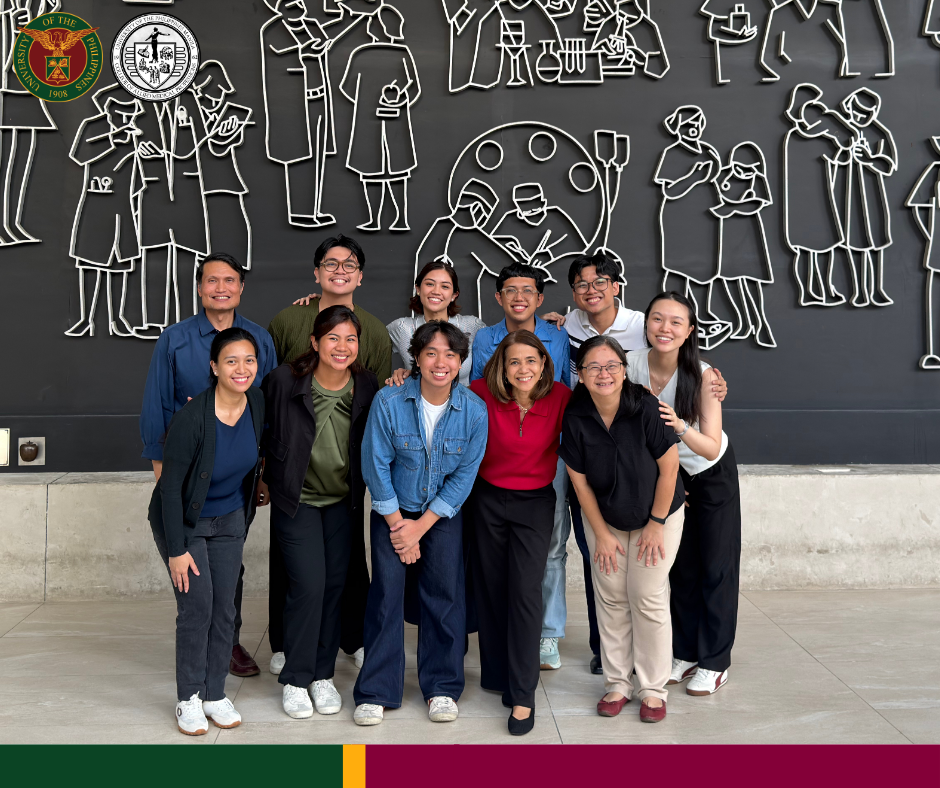
The UP Manila NExT Conference was attended by: Dr. Joseph Causapin, Dr. Anna-Liza Tan Pascual, Asst. Prof. Veronica Dee, Dr. Anthony Grecia, Ms. Juliana Marie Galbizo, Mr. Gabriel Antonio Bello, Mr. Dan Nathan Aspiras, Mr. Scott Jesley Noguerra, Mr. Cyrl Zeus Nagales, Ms. Jessa Fadri, and Ms. Micah Faith Marcial-Young


